Posted on: August 21, 2026
For manufacturers and industrial businesses, logistics is more than moving goods from one place to another, it is a key factor in operational efficiency, production costs and long-term competitiveness. When evaluating industrial investment in Angola, companies should assess not only the availability of land, but also its proximity to transport infrastructure, ports, suppliers and customers.
This guide explains why logistics should be considered at the earliest stage of an investment project, the role of Angola's transport network in supporting industrial growth and how strategically located developments such as Dubai Investments Park Angola (DIP Angola) can help businesses build more resilient supply chains.
Many investment decisions begin with discussions about land prices, labour availability or tax considerations. However, these factors alone do not determine whether an industrial operation will be efficient.
A factory may be built successfully, but if raw materials are difficult to transport or finished products take longer to reach customers, operating costs can remain permanently higher.
For this reason, logistics should be evaluated before selecting an industrial site—not after construction begins.
This reflects a broader trend identified by UNCTAD, where supply chain resilience and infrastructure quality have become increasingly important considerations for foreign direct investment decisions.
Questions investors should ask include:
Answering these questions early helps reduce operational risk and supports more informed investment decisions.
Angola has invested significantly in transport infrastructure as part of its strategy to diversify the economy and strengthen industrial development. Road rehabilitation, railway modernisation and port expansion have all been supported through national programmes and international financing, including projects backed by the African Development Bank.
Road rehabilitation, railway modernisation and port expansion are gradually improving the movement of goods within the country and supporting stronger regional trade connections. Institutions such as the African Development Bank continue to support infrastructure projects that improve connectivity and facilitate private investment.
While infrastructure quality varies by location, these developments are creating new opportunities for manufacturers and logistics providers seeking well-connected industrial sites.
The World Bank has also highlighted infrastructure and private sector development as important components of Angola's long-term economic diversification strategy.
Ports are essential for businesses that import machinery or raw materials, and export finished products.
Angola's Atlantic coastline provides access to international shipping routes linking Southern Africa with Europe, the Americas and other global markets. As industrial activity grows, efficient port access becomes increasingly important for reducing transport costs and improving supply chain reliability.
For businesses selecting industrial land, proximity to port infrastructure should be assessed alongside road connectivity, customs procedures and inland transport options.
Efficient logistics depends on more than maritime access. Industrial businesses also rely on road networks to move goods between production facilities, distribution centres and customers.
When evaluating a potential location, investors should consider:
A well-connected location offers greater operational flexibility and helps businesses adapt as production volumes increase.
Choosing an industrial location is not simply about where a facility will be built. It is about how efficiently the business will operate over the next decade.
A strategically located site can:
These advantages become particularly important for manufacturers operating in competitive regional and international markets.
For businesses considering industrial land in Angola, logistics should therefore be evaluated alongside infrastructure, utilities and legal considerations.
Barra do Dande is emerging as an important industrial hub due to its strategic location north of Luanda, offering businesses strong access to the capital and surrounding commercial markets.
Its position along the EN-100, proximity to the Barra do Dande Ocean Terminal, and planned port infrastructure within the Dande Free Zone strengthen the area’s transport and logistics connectivity.
Combined with available industrial land, expanding infrastructure, and growing investor interest, Barra do Dande is increasingly positioned to support manufacturing, logistics, warehousing, and related industries.
For many investors, the challenge is not simply finding available land but selecting a location that reduces operational complexity.
Dubai Investments Park Angola (DIP Angola) has been planned around this principle.
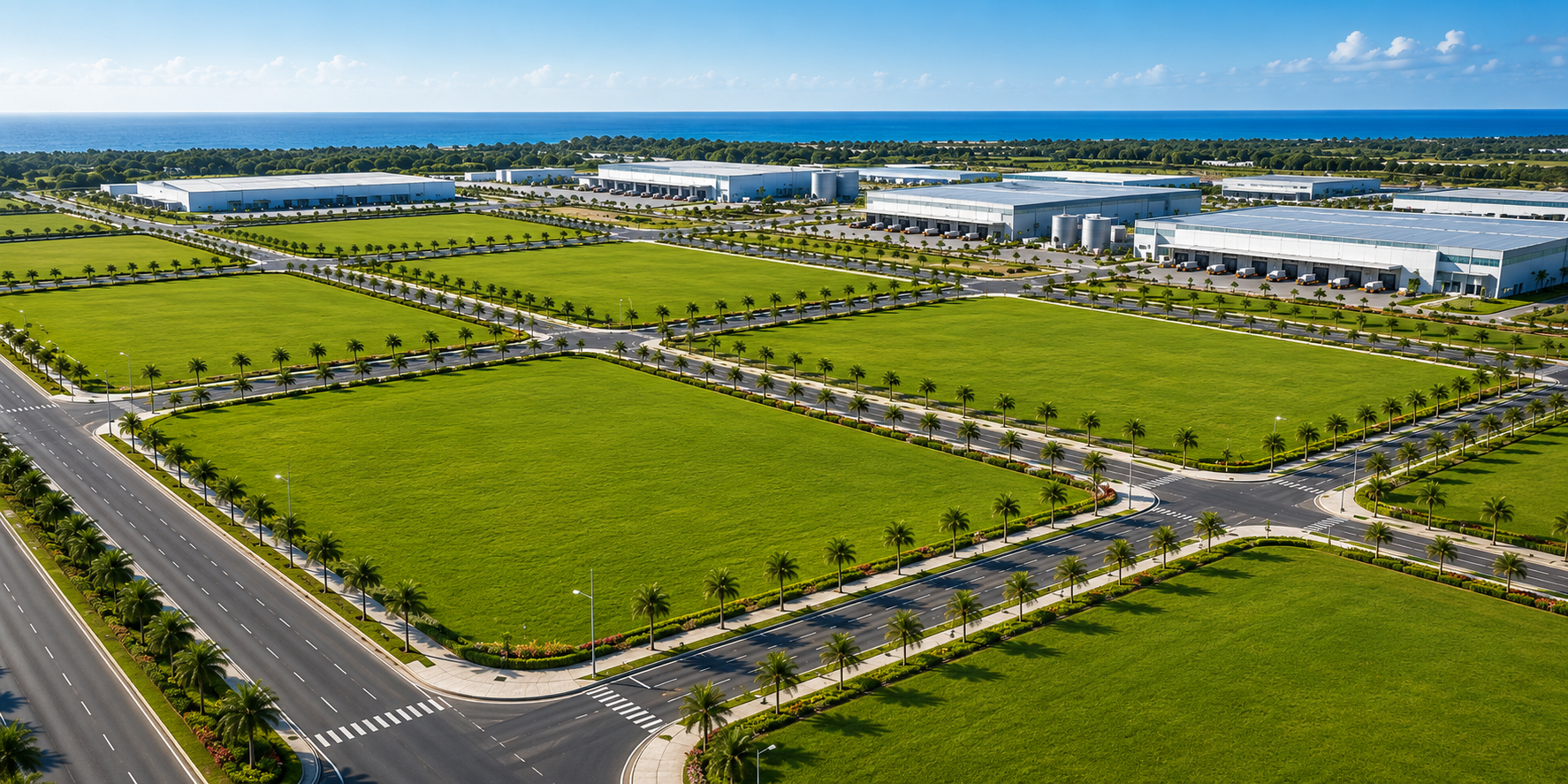
The development integrates industrial, logistics, commercial and residential areas within a master-planned environment. Its location provides access to major transport routes like the EN-100 highway and the Barra do Dande Ocean Terminal, while allowing businesses to establish operations within an integrated industrial ecosystem.
Rather than viewing logistics as an issue to solve after construction, developments such as DIP Angola incorporate connectivity and infrastructure into the planning process from the outset.
Logistics should not be viewed as a secondary operational consideration. It is a strategic factor that influences the efficiency, resilience and long-term competitiveness of any industrial investment.
By evaluating transport infrastructure, port access and supply chain connectivity before selecting a location, investors can reduce operational risk and build stronger foundations for growth.
For businesses exploring industrial investment opportunities in Angola, developments such as Dubai Investments Park Angola demonstrate how integrated planning and strategic location can support efficient industrial operations.

You can download our brochure for more information about the project Download